The Flagship OLED TV War of 2025
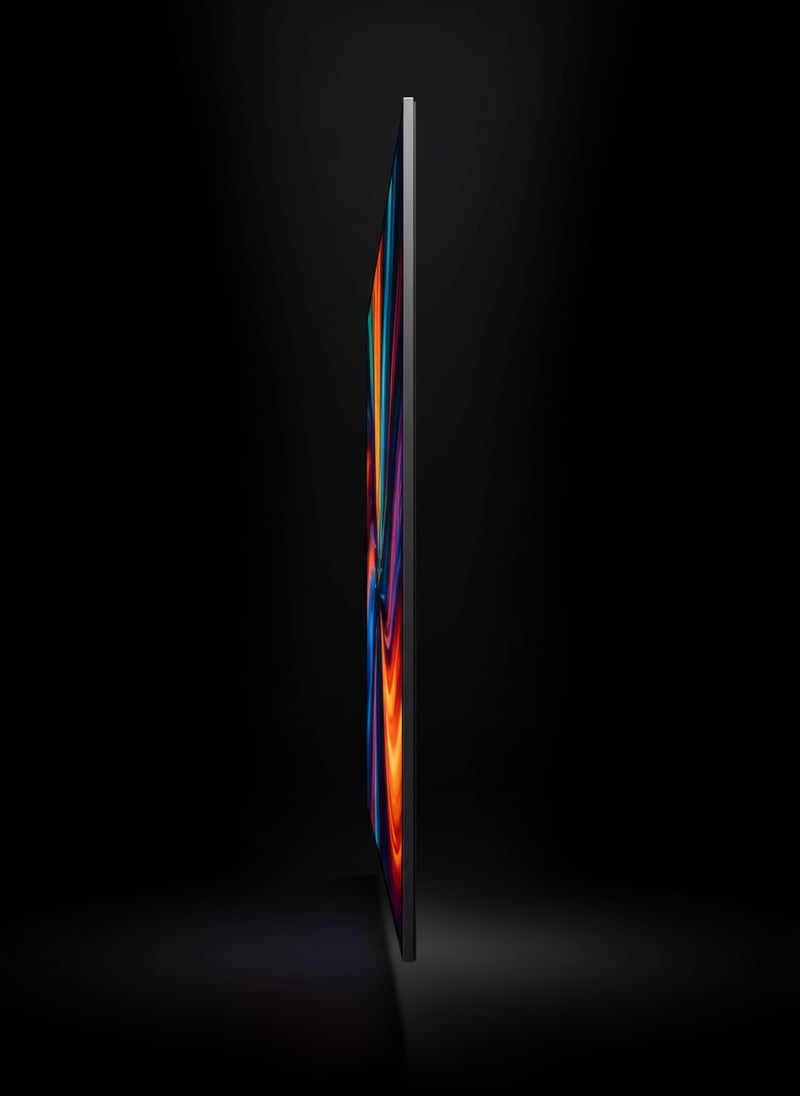


Tale of the Tape
The Breakdown
Picture Quality
The LG G5 has the edge with its 4-stack tandem OLED technology — it delivers richer highlights, deeper shadow detail, and the most accurate colors out of the box. Samsung's QD-OLED produces more saturated colors and slightly punchier images. Sony's Bravia 8 II has the best video processing — its XR Processor handles motion, upscaling, and tone mapping with unmatched finesse.
Brightness
The LG G5 hits 2,268 nits peak in Filmmaker Mode — the brightest OLED TV ever measured. Samsung's S95F is close at 2,198 nits. Sony's Bravia 8 II trails at approximately 1,800 nits. For HDR movie watching where specular highlights matter, the LG's brightness advantage is visible in direct comparison.
Anti-Glare
Samsung's evolved matte coating on the S95F is a game-changer for bright rooms. It swallows reflections that the LG and Sony panels mirror back. If your TV faces a window, the S95F is the only choice that handles direct light without washing out. LG and Sony both use semi-gloss finishes that reflect light sources.
Gaming
LG and Samsung are tied at 165Hz with four HDMI 2.1 ports, sub-10ms input lag, FreeSync Premium Pro, and G-Sync compatibility. Both are peak gaming displays. Sony's Bravia 8 II is limited to 120Hz and has slightly higher input lag — still great for casual gaming, but hardcore gamers will notice the difference.
Sound
Sony's Acoustic Surface Audio technology vibrates the screen itself as a speaker — it is genuinely impressive and makes both Samsung and LG sound thin by comparison. The Bravia 8 II can delay a soundbar purchase. Samsung and LG both need external audio to sound decent.
Value
The Sony Bravia 8 II at $2,800 is the cheapest flagship OLED in this trio, and Sony's superior processing and built-in audio mean you save further by not needing a soundbar immediately. Samsung at $3,300 brings the One Connect box and anti-glare. LG at $3,400 for the 65-inch commands a premium for the best picture technology.
The Verdict
LG OLED evo G5
The LG G5 OLED is the best picture on a flat screen in 2025 — tandem OLED technology has changed the game.
The LG G5 wins because its 4-stack tandem OLED panel represents a genuine generational leap. By stacking four organic layers, LG achieves brightness levels that match Samsung's QD-OLED while maintaining the natural color accuracy and deep blacks that OLED is known for. At 2,268 nits peak and 165Hz, it is both the brightest and fastest OLED TV you can buy. Samsung's S95F is dangerously close — and if your room has serious glare issues, the matte coating might tip the scales. But in a controlled viewing environment, the G5's picture quality is marginally but consistently better across every test pattern, movie scene, and gaming benchmark. This is the TV for people who obsess over image quality — and in this price range, you should.
Quick Specs
| Spec | LG OLED evo G5 | Samsung S95F QD-OLED | Sony Bravia 8 II |
|---|---|---|---|
| Panel | Primary RGB Tandem OLED (4-stack W-OLED) | QD-OLED with matte anti-glare | QD-OLED (3rd gen Samsung) |
| Size | 65" / 77" / 83" / 97" | 55" / 65" / 77" | 55" / 65" / 77" |
| Resolution | 4K (3840x2160) | 4K (3840x2160) | 4K (3840x2160) |
| Refresh Rate | 165Hz | 165Hz | 120Hz |
| HDR Peak | 2,268 nits (Filmmaker Mode) | 2,198 nits | ~1,800 nits |
| HDMI | 4x HDMI 2.1 | 4x HDMI 2.1 + One Connect box | 4x HDMI 2.1 |
| HDR Formats | Dolby Vision, HDR10, HLG | HDR10+, HDR10, HLG | Dolby Vision, HDR10, HLG |