The Handheld Gaming Showdown

Cara a Cara
El Análisis
Performance
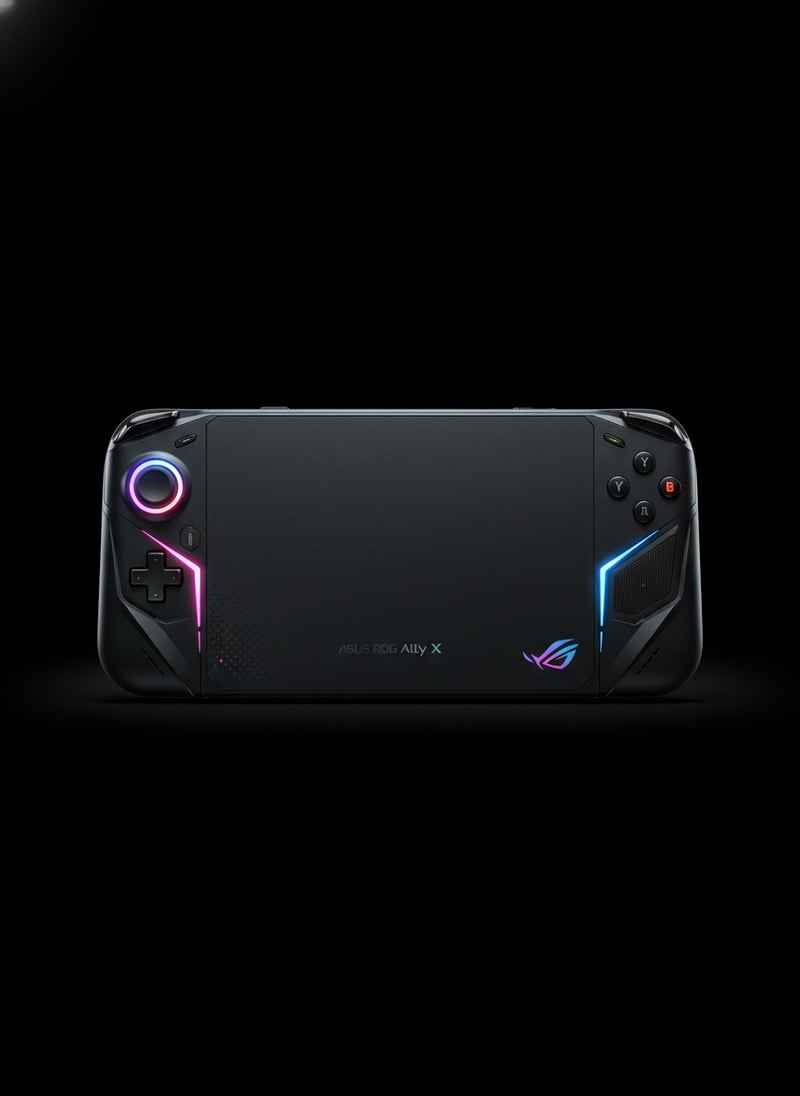
The ROG Ally X is the undisputed power king here. Its Ryzen Z2 Extreme pushes ~54 fps in Cyberpunk 2077 at 1080p medium — territory the other two can't touch. The Legion Go S and its Z1 Extreme sit comfortably in the middle, while the Steam Deck's Zen 2 / RDNA 2 combo is showing its age. But Valve's secret weapon is targeting 800p, which keeps frame rates playable where it matters.
Display Quality
OLED versus IPS is barely a contest. The Steam Deck OLED's panel delivers inky blacks, punchy colors, and a 90Hz refresh that makes every game look cinematic on a handheld. The Ally X counters with 1080p resolution and 120Hz, but its IPS panel can't match the contrast. The Legion Go S has the biggest screen at 8 inches, but brightness and color accuracy trail behind.
Battery Life
The ROG Ally X packs a massive 80Wh cell that keeps it competitive despite its power-hungry chip. The Steam Deck OLED sips power thanks to its efficient APU and lower resolution target — 3-12 hours depending on the game is genuinely impressive. The Legion Go S is the weak link at 2-6 hours, with its Z1 Extreme draining the modest 55.5Wh battery faster than you'd like.
Value
At $549 for 1TB, the Steam Deck OLED is highway robbery. You get an OLED screen, a polished OS, and access to your entire Steam library for hundreds less than the competition. The Ally X at $799 and Legion Go S at $830 charge premium prices — the Ally X at least justifies it with raw power, but the Legion Go S feels overpriced for Z1 Extreme hardware.
Software Experience
SteamOS is the best handheld operating system, full stop. Instant suspend/resume, seamless cloud saves, a controller-native UI, and zero Windows bloat. The Steam Deck and Legion Go S both benefit from this. The Ally X runs Windows 11, which gives you Game Pass and Epic access but also gives you desktop pop-ups, update nags, and a UI designed for mice on a 7-inch screen.
Comfort & Portability
The Ally X feels like holding an Xbox controller — natural, grippy, and light at 1.34 lbs. The Steam Deck OLED is slightly heavier but its ergonomic grip design is excellent for long sessions. The Legion Go S is the heaviest at 1.88 lbs and while its curved edges help, that weight adds up on flights and commutes.
El Veredicto
Steam Deck OLED
The Steam Deck OLED Wins By Being the Smartest, Not the Strongest.
Raw specs say the ROG Ally X should win this fight. It has the fastest chip, the most RAM, and the biggest battery. But gaming handhelds aren't spec sheets — they're experiences. And the Steam Deck OLED delivers the best experience by a mile. Valve understood something ASUS and Lenovo still haven't figured out: nobody wants to troubleshoot Windows on a 7-inch screen. SteamOS is instant-on, silky smooth, and built for thumbsticks. The OLED display makes every game look stunning despite the lower resolution. And at $549 for 1TB, it costs $250-$280 less than its rivals while delivering 90% of the gaming experience. The Steam Deck OLED doesn't need to be the most powerful — it just needs to be the most enjoyable to pick up and play. And it is.
Especificaciones
| Spec | Steam Deck OLED | ASUS ROG Ally X | Lenovo Legion Go S |
|---|---|---|---|
| Display | 7.4-inch OLED, 1280x800, 90Hz | 7-inch IPS, 1920x1080, 120Hz VRR | 8-inch IPS, 1920x1200, 120Hz |
| Processor | AMD Zen 2 / RDNA 2 APU | AMD Ryzen Z2 Extreme | AMD Ryzen Z1 Extreme |
| RAM | 16 GB LPDDR5 | 24 GB LPDDR5X | 16 GB LPDDR5X |
| Storage | 1 TB NVMe SSD | 1 TB NVMe SSD | 512 GB NVMe SSD |
| Battery | 50Wh (3-12 hours) | 80Wh (3-10 hours) | 55.5Wh (2-6 hours) |
| Weight | 1.41 lbs | 1.34 lbs | 1.88 lbs |
| OS | SteamOS 3.x | Windows 11 | SteamOS 3.x |