The Handheld Gaming Showdown

Frente a Frente
A Análise
Performance
The ROG Ally X is the undisputed power king here. Its Ryzen Z2 Extreme pushes ~54 fps in Cyberpunk 2077 at 1080p medium — territory the other two can't touch. The Legion Go S and its Z1 Extreme sit comfortably in the middle, while the Steam Deck's Zen 2 / RDNA 2 combo is showing its age. But Valve's secret weapon is targeting 800p, which keeps frame rates playable where it matters.
Display Quality
OLED versus IPS is barely a contest. The Steam Deck OLED's panel delivers inky blacks, punchy colors, and a 90Hz refresh that makes every game look cinematic on a handheld. The Ally X counters with 1080p resolution and 120Hz, but its IPS panel can't match the contrast. The Legion Go S has the biggest screen at 8 inches, but brightness and color accuracy trail behind.
Battery Life
The ROG Ally X packs a massive 80Wh cell that keeps it competitive despite its power-hungry chip. The Steam Deck OLED sips power thanks to its efficient APU and lower resolution target — 3-12 hours depending on the game is genuinely impressive. The Legion Go S is the weak link at 2-6 hours, with its Z1 Extreme draining the modest 55.5Wh battery faster than you'd like.
Value
At $549 for 1TB, the Steam Deck OLED is highway robbery. You get an OLED screen, a polished OS, and access to your entire Steam library for hundreds less than the competition. The Ally X at $799 and Legion Go S at $830 charge premium prices — the Ally X at least justifies it with raw power, but the Legion Go S feels overpriced for Z1 Extreme hardware.
Software Experience
SteamOS is the best handheld operating system, full stop. Instant suspend/resume, seamless cloud saves, a controller-native UI, and zero Windows bloat. The Steam Deck and Legion Go S both benefit from this. The Ally X runs Windows 11, which gives you Game Pass and Epic access but also gives you desktop pop-ups, update nags, and a UI designed for mice on a 7-inch screen.
Comfort & Portability
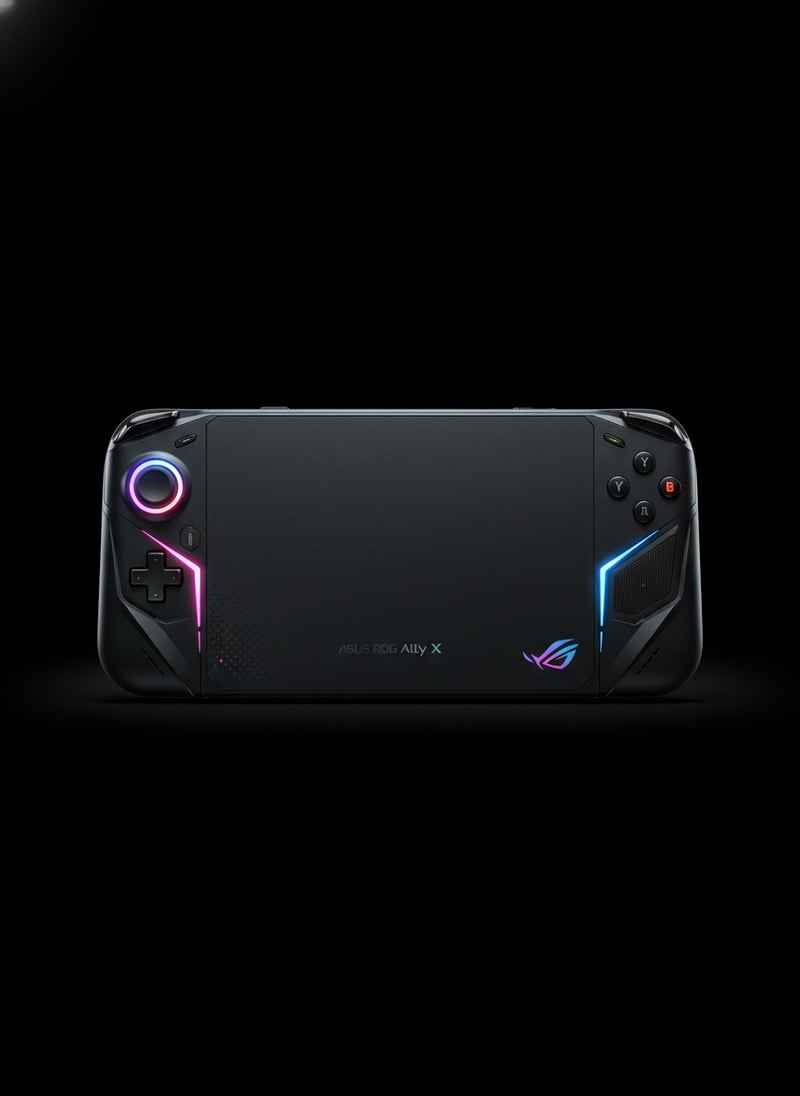
The Ally X feels like holding an Xbox controller — natural, grippy, and light at 1.34 lbs. The Steam Deck OLED is slightly heavier but its ergonomic grip design is excellent for long sessions. The Legion Go S is the heaviest at 1.88 lbs and while its curved edges help, that weight adds up on flights and commutes.
O Veredito
Steam Deck OLED
The Steam Deck OLED Wins By Being the Smartest, Not the Strongest.
Raw specs say the ROG Ally X should win this fight. It has the fastest chip, the most RAM, and the biggest battery. But gaming handhelds aren't spec sheets — they're experiences. And the Steam Deck OLED delivers the best experience by a mile. Valve understood something ASUS and Lenovo still haven't figured out: nobody wants to troubleshoot Windows on a 7-inch screen. SteamOS is instant-on, silky smooth, and built for thumbsticks. The OLED display makes every game look stunning despite the lower resolution. And at $549 for 1TB, it costs $250-$280 less than its rivals while delivering 90% of the gaming experience. The Steam Deck OLED doesn't need to be the most powerful — it just needs to be the most enjoyable to pick up and play. And it is.
Especificações
| Spec | Steam Deck OLED | ASUS ROG Ally X | Lenovo Legion Go S |
|---|---|---|---|
| Display | 7.4-inch OLED, 1280x800, 90Hz | 7-inch IPS, 1920x1080, 120Hz VRR | 8-inch IPS, 1920x1200, 120Hz |
| Processor | AMD Zen 2 / RDNA 2 APU | AMD Ryzen Z2 Extreme | AMD Ryzen Z1 Extreme |
| RAM | 16 GB LPDDR5 | 24 GB LPDDR5X | 16 GB LPDDR5X |
| Storage | 1 TB NVMe SSD | 1 TB NVMe SSD | 512 GB NVMe SSD |
| Battery | 50Wh (3-12 hours) | 80Wh (3-10 hours) | 55.5Wh (2-6 hours) |
| Weight | 1.41 lbs | 1.34 lbs | 1.88 lbs |
| OS | SteamOS 3.x | Windows 11 | SteamOS 3.x |